

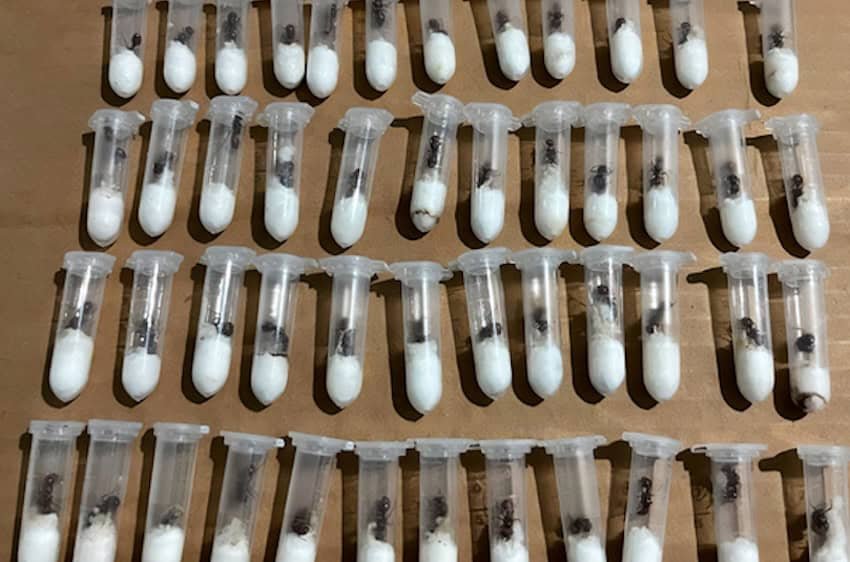
Mexican authorities recently made a significant discovery in the battle against illegal wildlife trafficking, seizing 105 queen ants in Jalisco. These ants were hidden inside plastic toys and falsely labeled as collectibles in a shipment destined for Southeast Asia. This incident, reported by the Federal Attorney for Environmental Protection (Profepa), shines a light on the ongoing issue of wildlife trafficking in the country and its broader implications for biodiversity and ecology.
On July 9, environmental officials flagged a suspicious package in El Salto, Jalisco, located near Guadalajara. The package, addressed to Laos, contained individual test tubes housing the queen ants, concealed within toy figures. Within one toy, inspectors uncovered 22 tubes, and in another, 83 tubes. The design of the packages, including moisture and cotton inside each tube, demonstrated an attempt to mimic the natural habitat required to keep the ants alive, although experts assert that such conditions are insufficient for their survival.
Out of the seized ants, 87 survived and have been released into the Cerro Viejo Protected Natural Area, fostering a return to their natural ecosystem. The seized insects belong to the genus Pogonomyrmex, commonly known as harvester ants, which play an essential role in seed dispersal and maintaining soil health.
The interest in queen ants has been on the rise, especially in Europe and Asia, where collectors invest in formicariums. These controlled ecosystems center around a fertilized queen that can produce substantial ant colonies, thus making them valuable objects of a niche hobby. Prices for queen ants can range from 200 to 400 pesos (about US $11 to $22), with rarer species fetching even higher amounts.
Illegal wildlife trafficking poses a significant challenge in Mexico, with authorities regularly intercepting various species like turtles, parrots, and reptiles. The problem escalated during the coronavirus pandemic, highlighting a troubling trend that affects not just the animals involved but also biodiversity and local ecosystems.
According to the United Nations Office on Drugs and Crime, more than 4,000 species are impacted globally by wildlife trafficking, contributing to a trade valued at an estimated US $23 billion annually. While this recent seizure is a step toward safeguarding wildlife, no arrests have been reported yet, and Profepa has pledged to continue monitoring and combating illegal activities related to wildlife trafficking.