

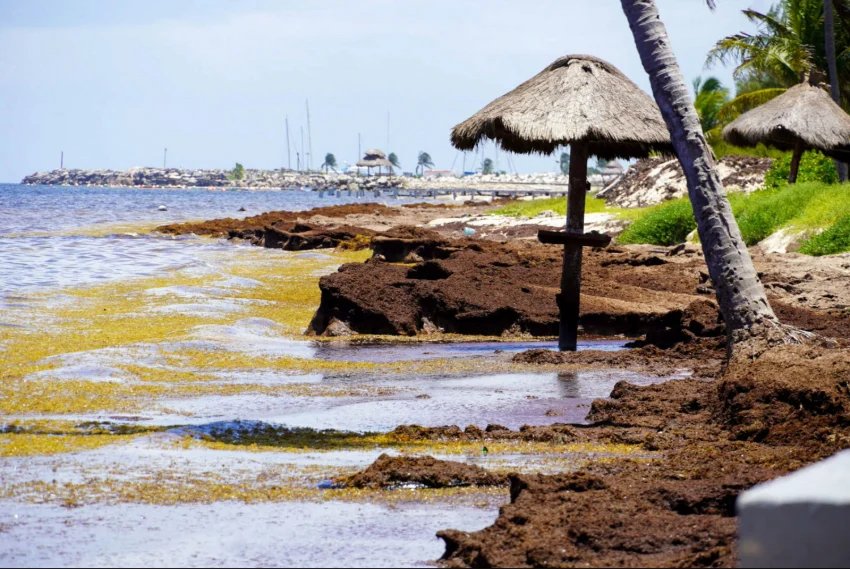
Japan’s recent commitment to support Mexico in managing the ongoing sargassum crisis is a hopeful development for communities along the Caribbean coast. The collaboration, announced by the Foreign Ministry, aims to alleviate the impact of this seaweed influx, which has affected local economies and tourism.
Through this partnership, Japan will share advanced ocean-monitoring technology and provide specialized equipment such as robotics and sensors. This assistance is crucial, as it will enhance Mexico’s capability to collect and manage sargassum along its beautiful beaches, which are vital for tourism and local livelihoods.
In addition to equipment, Japan will supply sargassum-collecting ships and vessels specifically designed for effective removal of the algae from the ocean. The initiative aims not only to address the immediate challenges posed by sargassum but also to support sustainable solutions. New technologies for biological decomposition and satellite monitoring will be implemented, fostering a collaborative effort between Japan’s International Cooperation Agency and Mexico’s Agency for International Development Cooperation.
The project also focuses on research and development, exploring how to transform sargassum into valuable products like fertilizers, biofuels, and building materials. This approach not only aims to mitigate the adverse effects on fisheries and public health but also aspires to pave the way for new economic opportunities, ensuring that coastal communities can thrive.
This announcement is part of broader talks between Foreign Minister Roberto Velasco and Japanese Foreign Minister Toshimitsu Motegi, emphasizing the importance of strengthening bilateral relations. They also revealed plans for a high-level economic dialogue aimed at boosting trade, which has already shown a promising 4% increase in recent months.
To further support these initiatives, the Mexican government, under President Claudia Sheinbaum, has pledged approximately 2 billion pesos to combat sargassum along Quintana Roo’s coastline. These funds will focus on 30 miles of beachfront, encompassing popular destinations like Cancún and Tulum.
Looking ahead, the international EU-Caribbean Global Gateway Conference on Sargassum will be held in Cancún in October. This conference will gather experts to deliberate on collaborative strategies for managing sargassum and developing circular economy solutions. With these efforts, it’s hoped that communities can find effective ways to coexist with the challenges posed by sargassum while transforming them into opportunities for better futures.