

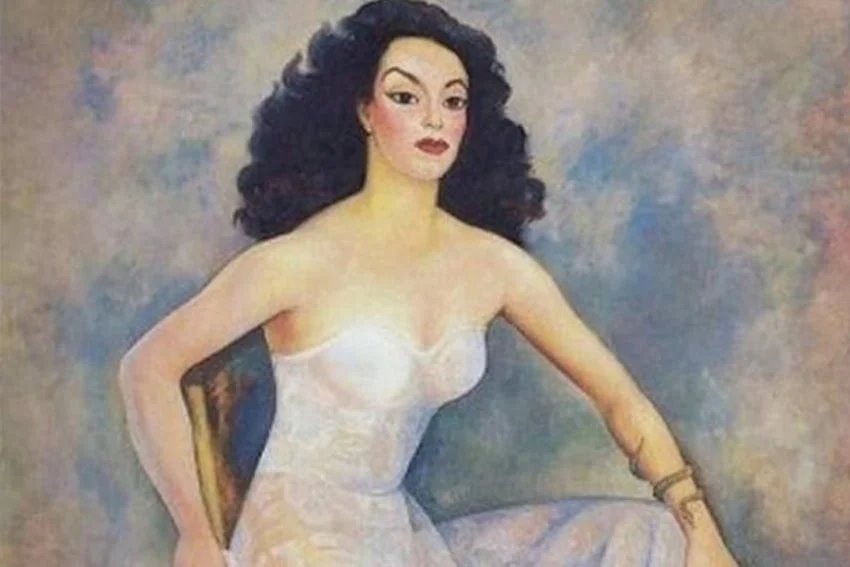
In a tale marked by artistic ambition and personal conflicts, a long-lost portrait of the legendary actress María Félix, painted by renowned muralist Diego Rivera, continues to elude the public nearly seven decades after its creation. Known as “La Doña,” Félix envisioned a stunning representation of herself dressed in traditional Tehuana attire, a request that Rivera ultimately did not fulfill. This divergence in artistic vision laid the groundwork for a complicated relationship between the two icons of Mexican culture, with repercussions still felt today.
In 1949, Rivera invited Félix to his studio in San Ángel to unveil her portrait, but the result did not meet her expectations. Instead of showcasing her as a proud Mexican woman, Rivera depicted her in a style that left her feeling exposed and dissatisfied. In later interviews, Félix was candid about her disapproval of Rivera’s work, suggesting that her artistic sensibilities clashed with his. Despite her initial reactions, she kept the altered portrait on display in her home for years, reflecting a complex relationship with the art and the artist.
Over time, that painting changed hands more than once. After her initial ownership, Félix sold it to Dr. José Álvarez Amézquita, a notable figure in Mexican healthcare politics. Years later, the portrait found itself in the collection of singer-songwriter Juan Gabriel, who had long admired Félix. His affection for the actress was evident in his artistic tributes, even drawing comparisons between her and the Virgin of Guadalupe. Tragically, after Juan Gabriel’s passing in 2016, the portrait vanished, leaving its whereabouts shrouded in mystery.
As the search for the painting continues, questions arise about its significance as a cultural artifact. The National Institute of Fine Arts and Literature (INBAL) would have needed to be informed of any transfers involving such a historically relevant piece, yet the current location remains unknown. Speculation suggests it could reside within the family or might have been sold to a controversial politician, but no verifiable evidence has confirmed these claims.
This narrative illustrates not only a lost work of art but also a fissure in the rich tapestry of Mexican cultural heritage. As citizens reflect on the legacies of these figures, the story of Félix and Rivera’s portrait continues to resonate, reminding us of the delicate interplay between personal expectations and artistic expression in the vibrant landscape of Mexico’s history.