

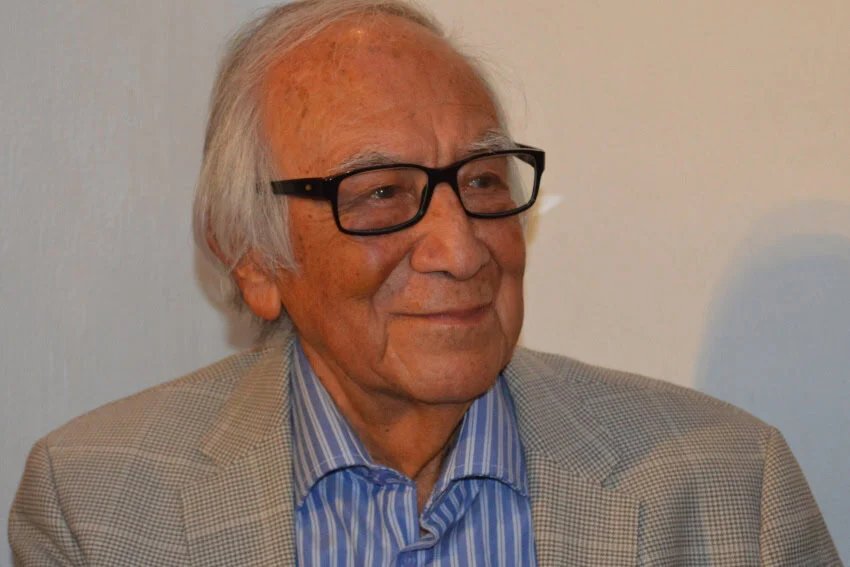
On April 7, 2017, the vibrant spirit of Arturo García Bustos slipped away in Coyoacán, leaving behind a rich legacy that continues to resonate in the hearts of many Mexicans. Born on August 8, 1926, in Mexico City, García Bustos dedicated his life’s work to expressing the beauty and complexity of Mexican culture. His murals and printmaking pieces not only depict the essence of Mexican identity but also provide a testament to the social and political struggles that shape our daily lives.
A student of the illustrious Frida Kahlo and a partner to the talented Rina Lazo, García Bustos emerged from a childhood deeply influenced by the bustling streets of Mexico City. He reminisced about watching Diego Rivera create monumental murals at the Secretaría de Educación Pública, inspiring him to break away from the traditional confines of the Academia de San Carlos. By transferring to La Esmeralda, he found his true artistic voice amid a community of like-minded rebels, shaping his approach to art and activism.
García Bustos’ time with Kahlo nurtured his commitment to Mexican culture and sparked a desire to challenge the status quo. He joined artist collectives like the Taller de Gráfica Popular, leveraging graphic art to amplify the voices of the marginalized. He felt a duty to merge art with social advocacy, reflecting the bustling reality of urban life through his work. These experiences guided him through a career dedicated to making art accessible and engaging with the public directly.
His teaching journey became as significant as his artistic contributions. At institutions such as the Escuela de Bellas Artes de Oaxaca, he shaped the talents of future artists, including renowned Francisco Toledo. Through compassionate mentorship, he inspired respect for authenticity and self-expression, nurturing generations who would carry forward the torch of Mexican artistry.
García Bustos leaves behind an extensive body of work that encompasses both muralism and printmaking. Each mural tells a story — from “Las Siete Regiones de Oaxaca” to “The University on the Threshold of the 21st Century” at the Universidad Nacional Autónoma de México. These pieces invite us to engage with our history and communal identity, fostering a sense of belonging and pride in our cultural heritage.
As we commemorate the 100th anniversary of his birth, we celebrate not just an artist, but a visionary who intertwined life, art, and activism. His remarkable legacy lives on, enriching Mexico’s public spaces and perpetuating a passion for creativity in the hearts of both seasoned artists and budding creators.