

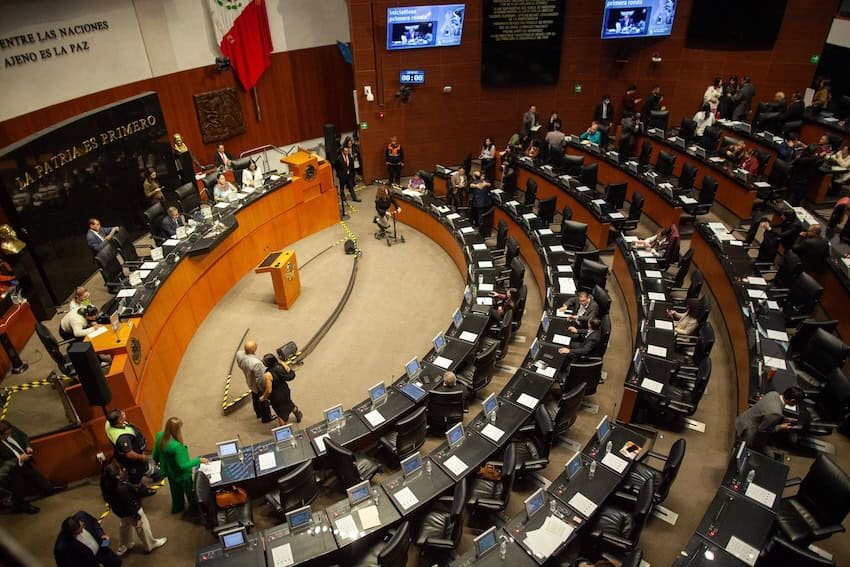
On Tuesday, the Mexican Senate passed a significant bill that will reshape how citizens engage with financial transactions, starting with a ban on cash payments at gas stations and highway toll booths. Seventy-three senators voted in favor, while 34 opposed the legislation, which reflects the influence of the ruling Morena party in Congress. This new Digital Economy Law aims to facilitate electronic payments throughout the country, changing daily lives by gradually shifting away from cash.
Once the law is enacted, the federal Finance Ministry will identify sectors where digital payments will become the only accepted form. President Claudia Sheinbaum, who introduced the bill, anticipates that this move will enhance tax revenue and streamline government procedures. The transition will initially affect gas stations and toll booths, but the timeline for when cash will be fully phased out remains uncertain.
The law seeks to promote accessibility to digital transactions, benefitting consumers and businesses alike. By encouraging electronic payments, it aims to reduce reliance on cash, thus enabling better tracking of financial activities and bolstering efforts against tax evasion. Local, state, and federal entities will be required to integrate these digital methods into their operations.
Senator Emmanuel Reyes highlighted the potential for small and medium-sized enterprises to expand their payment options, improving sales efficiency. This could also enhance their financial visibility, potentially easing access to loans from banks. The government has previously taken steps to support small businesses in accessing credit, a move that may find reinforcement through this new legislation.
However, not all voices support the shift to a cashless society. Opposition Senator Francisco Daniel Barreda raised concerns that mandating digital payments may alienate those who rely on cash, viewing it as a move toward financial exclusion rather than inclusion. Critics argue that the increased costs for small businesses to adopt digital payment systems could inadvertently drive up prices for everyday items.
The law allows for cash payments in circumstances where digital systems fail, ensuring that options remain for those who may struggle to transition to digital payments. While supporters advocate for modernization and financial inclusivity, skeptics question the practical implications of such a significant shift in the Mexican economy, particularly for the informal workers who rely heavily on cash transactions.
As discussions continue, the broader impact of this legislation will unfold in the coming months, influencing economic behavior and accessibility for millions of Mexicans. The government’s commitment to modernization must balance the needs of its diverse population, ensuring that no one is left behind in this digital transition.