

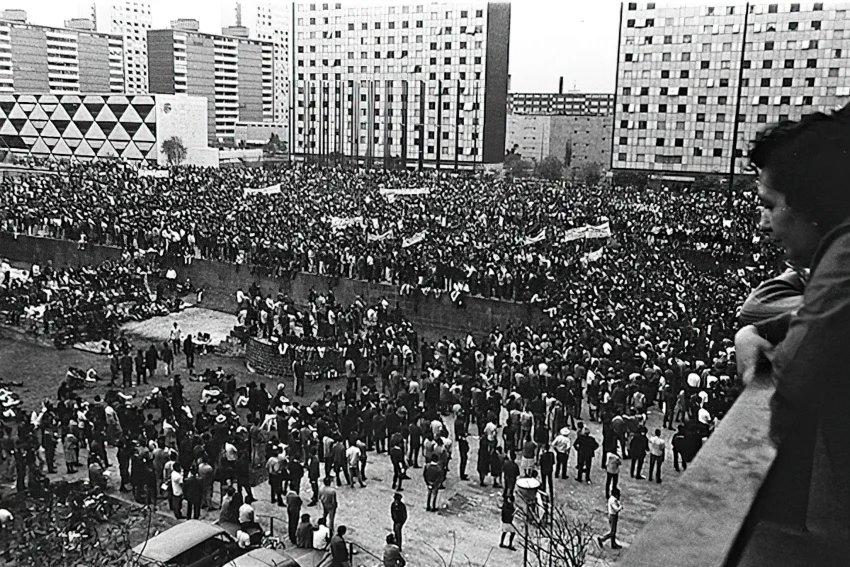
The Tlatelolco student massacre of 1968 remains a haunting chapter in Mexican history, deeply affecting the nation’s collective memory. What began as a fight between rival high schools in a Mexico City marketplace escalated into a clash with police, revealing a stark pattern of government repression against dissent. This event serves as a reminder of the importance of civic engagement and the ongoing struggle for justice in Mexico.
The conflict sparked protests as students rallied against police violence, which only intensified the authorities’ crackdown. By the fourth day, high school students from San Ildefonso Preparatory declared a strike, prompting President Gustavo Díaz Ordaz to send military forces to suppress the movement. When soldiers violently stormed the campus, they were met with locked gates, leading them to destroy the ornate entrance and confront anyone inside. This brutal repression shocked many Mexicans, leading to a wave of protests that resonated across the nation.
As the public became aware of these events, feelings of solidarity emerged, shifting the protest base from high schools to universities, particularly the National Autonomous University of Mexico (UNAM). The rector at the time, Javier Barros Sierra, led a peaceful march of 50,000 to oppose government violence. This rally drew attention to the systemic issues of brutality that affected many social sectors, including teachers and healthcare workers.
Raúl Álvarez Garín, a student leader from the National Polytechnic Institute, articulated the demands of his peers—calling for the release of detained students and reforms to end oppressive laws. They sought more open political processes rather than regime change. However, their pleas were met with indifference, prompting a monumental march to the Zócalo, which drew a crowd of 200,000, reinforcing that their frustrations were shared by many Mexicans.
As tensions escalated, fear of reprisals heightened, culminating in a harrowing scene on October 2. When thousands gathered in the Plaza de las Tres Culturas for a peaceful demonstration, army forces surrounded the area. Despite initial hopes for dialogue, a violent crackdown ensued, leaving a tragic legacy of loss and suffering. Accounts from survivors highlight the chaos and pain experienced that day as gunfire erupted, tragically claiming lives and instilling fear in the hearts of many.
While the government intended to showcase Mexico as a burgeoning power during the upcoming Olympic Games, the massacre revealed deep-seated discontent within society. What transpired that day led many to distrust the government, transforming public sentiment dramatically. The aftermath instigated a long fight for truth, justice, and accountability, with annual commemorations of the massacre serving as a solemn reminder of the need for vigilance against oppression and abuse of power.
The Tlatelolco massacre significantly altered Mexico’s historical trajectory, fostering a generation of activists who laid the groundwork for future movements. Today, October 2 serves not just as a day of remembrance, but as an enduring call for democratic ideals and the protection of civil liberties. In this way, the legacy of 1968 continues to inspire ongoing dialogue about justice, memory, and the role of citizens in shaping a better future for all Mexicans.