

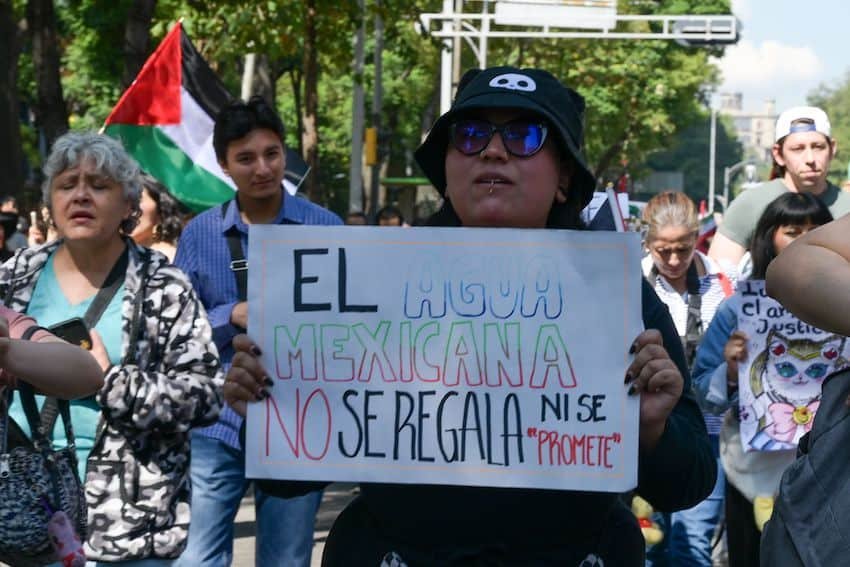
A water cooperation agreement between the state government of Chihuahua and Israel’s international cooperation agency, MASHAV, is igniting public unrest in the region. As water scarcity grips the area, residents feel the weight of these discussions on their daily lives.
On Saturday, thousands took to the streets of Chihuahua City, led by groups like Save the Hills of Chihuahua and the Feminist Assembly. They voiced their concerns against the state government and the Central Water and Sanitation Board (JCAS), accusing them of engaging with Israel amid ongoing conflicts in Gaza. The protesters demand an end to such agreements and a ceasefire in these global tensions, reflecting a broader sentiment shared across at least 14 states in Mexico.
The heart of this controversy lies in a cooperation agreement signed in February 2023 that aims to foster knowledge exchange in water management. It allows Israeli companies to contribute to projects addressing the urgent water challenges in Chihuahua through 2027. However, many view this as more than just a technical exchange, suspecting it opens doors for Israeli businesses to benefit from the state’s water infrastructure.
Critics also raise legal concerns, arguing that the agreement was not registered with the Ministry of Foreign Relations, a step that might legally invalidate it in Mexico. Yet, Governor Maru Campos Galván and JCAS head Mario Mata Carrasco defend the agreement as a non-binding measure meant to share expertise, clarifying that it does not create legal obligations or concessions regarding local water rights.
According to Mexican law, non-binding agreements may not require the same level of registration as treaties. However, the Ministry of Foreign Relations advises seeking registration for clarity and consistency with the nation’s foreign policy.
For Chihuahua’s government, this agreement represents hope for improved water management solutions, especially amid severe drought conditions. As citizens demand transparency and accountability, the situation highlights a critical intersection of local resources and international relations that continues to shape daily lives in the state.