

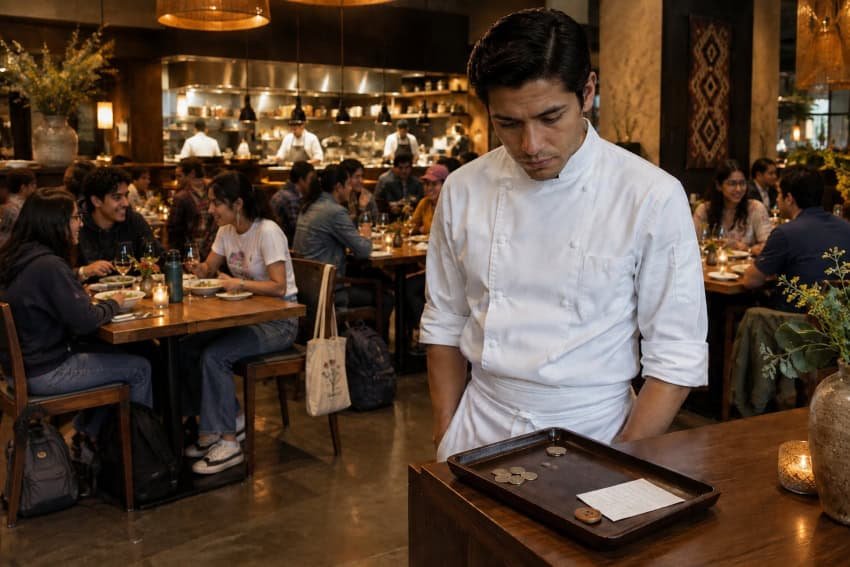
A new dining initiative in Mexico City has sparked a conversation about accessibility and economic values in the culinary world. The experimental “Pay What You Can” model, implemented by renowned local chefs, aimed to break down financial barriers, allowing patrons to select their own price for a multi-course fine dining experience. However, the results were surprising: despite a significant increase in customers, the total revenue for the day barely covered the cost of a single order of tortillas.
Organizers reported a 400% increase in foot traffic, but receipts totaled just 84 pesos, along with a few tokens and personal notes expressing gratitude. Head chef Mateo Sandoval reflected on the initiative, noting the unexpected reality that patrons valued a gourmet experience at just 3.50 pesos per person. The dining event, attended by a mix of locals and international critics, started on a positive note but soon faced challenges when some diners left little more than compliments and remnants from their meals.
Experts point out that while pay-what-you-can models have worked in various retail settings, their application in fine dining, especially in economically diverse neighborhoods, requires careful consideration. A recent audit revealed that over two-thirds of customers paid with small change, while others offered verbal praise or left online reviews that highlighted the social vision of the restaurant, yet contributed nothing financially.
Local graduate student Fernando Ruiz, who described his meal as transformative, contributed 40 centavos and an expired transit pass. He emphasized the community spirit present during the dinner, recognizing that such engagements hold value beyond monetary exchange, a sentiment reinforced by the patrons who attended.
As the initiative concludes, the restaurant’s management acknowledges their commitment to social justice but has announced a return to traditional payment practices for upcoming events, with the “pay what you can” option limited to select items. This journey highlights the complexities of merging culinary art with social equity, revealing both the potential and challenges of innovating within the food landscape in Mexico City.