

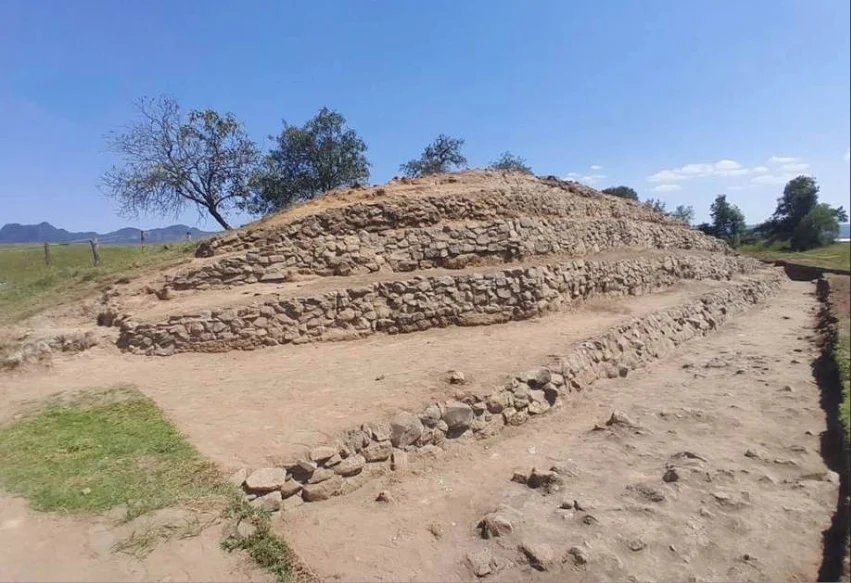
A remarkable archaeological discovery in Teteles de Ávila Castillo, Puebla, has revealed a pre-Hispanic solar observatory that sheds light on the advanced astronomical understanding of ancient civilizations in Mexico. Research conducted by the National Institute of Anthropology and History (INAH) has identified this site, known as “Grupo E,” as the oldest of its kind in the country, dating back over 2,500 years. The findings not only enhance our cultural heritage but also remind us of the sophisticated ways early inhabitants integrated the celestial movements into their daily lives, forging connections between nature, astronomy, and community.
This monumental architectural complex appears to have played a dual role—not only as a ceremonial space but also as a sophisticated tool for astronomical observations. The layout of the settlement suggests that its inhabitants thoughtfully oriented their structures according to celestial alignments, a practice that reveals a deep understanding of the cosmos. The significance of this discovery extends beyond Teteles, as it challenges our previous notions about pre-Hispanic urban planning and astronomy in regions outside the well-known Maya territories.
INAH notes that this finding stands apart from the observatory at Uaxactún in Guatemala, traditionally considered a central site for ancient Maya astronomical observation. While both complexes share a similar timeline, the Uaxactún structure is notably larger. The ongoing research emphasizes how the inhabitants of Teteles may have tracked crucial agricultural events based on solar movements, indicating a deeply woven connection between their agricultural practices and the universe.
Archaeologist Alberto Diez Barroso describes this ancient settlement as a model of urban planning influenced by environmental features, such as nearby mountain peaks. The structures consist of a quadrangular courtyard with two platforms that reveal the astronomical knowledge possessed by these early people. One platform serves an important function in marking seasonal changes, allowing for the tracking of the sun’s journey at significant points throughout the year.
This discovery not only enriches our understanding of the Huastec and Maya groups but may also provide insights into their interactions during early human settlement in the Sierra Norte region. It highlights the potential for deeper explorations into our shared histories and cultural roots. As more research unfolds, the setting at Teteles de Ávila Castillo promises to be a significant reference point for studies of Mesoamerican civilization, emphasizing the timeless bond between humanity and the cosmos.