

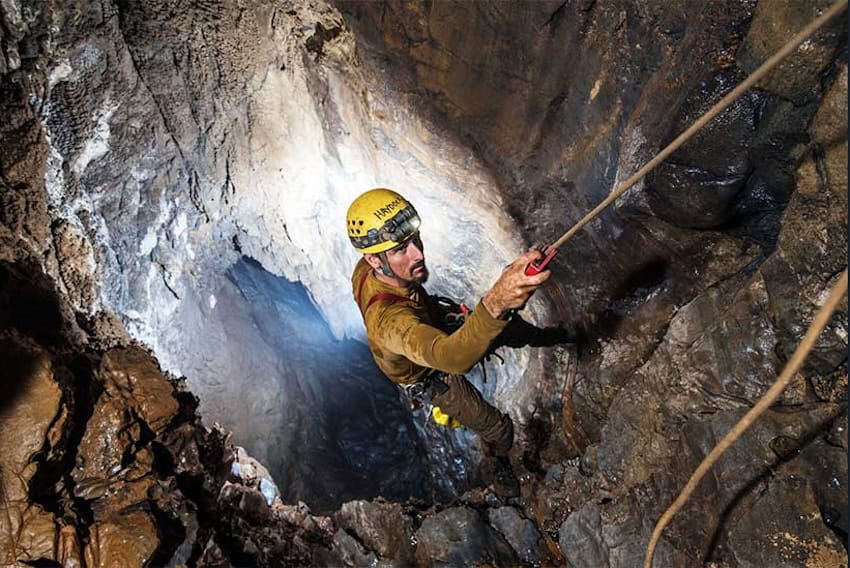
In a captivating journey that began in 1965, college students from Austin, Texas, traced their curiosity to Huautla de Jiménez, Oaxaca, leading to the discovery of North America’s deepest cave system, Sistema Huautla. This remarkable natural wonder, now extending over 101 kilometers, awaits further exploration, potentially surpassing 105 kilometers, enriching scientific understanding and drawing international attention to Mexico’s unique geological heritage.
With its breathtaking limestone formations, vast chambers, and hidden waterfalls, Sistema Huautla boasts over 30 entrances and hosts a vibrant ecosystem. For local residents, this growing interest can foster tourism and provide educational opportunities, directly benefiting the community and nurturing a sense of pride in their extraordinary surroundings.
Every April, the Proyecto Espeleológico Sistema Huautla (PESH) organizes expeditions, attracting volunteers from across the globe who contribute to ongoing studies in geology, biology, and archaeology. This year, 59 volunteers braved the depths to deepen our understanding of this subterranean marvel while cherishing the cultural and natural history of the Mazatec community.
Underground, teams face the challenges of isolation, relying on meticulously planned schedules to coordinate their explorations. The research efforts conducted within these caves not only aim to unravel geological mysteries but also explore the delicate balance of local ecosystems, including unique species like the cave-adapted blind scorpion, Alacran tartarus. This species, discovered 800 meters below the surface, has sparked scientific interest for its potential in developing new antivenoms.
While the thrill of adventure abounds, participants in the exploration take their role seriously, ensuring that the knowledge gathered is shared with the Mazatec people, who may not have the means to explore these depths themselves. They collect invaluable data, photographs, and experiences that enrich both their lives and the lives of locals, fostering a bond between diverse communities that share this precious land.
The essence of these explorations transcends mere science; it is about connection and mutual enrichment—an acknowledgment of the beauty that lies beneath, both in nature and in the spirit of cooperation. In this way, the caves not only protect their secrets but also weave a tapestry of stories that resonate throughout Mexico, reminding us of the importance of conservation, collaboration, and shared wisdom.