

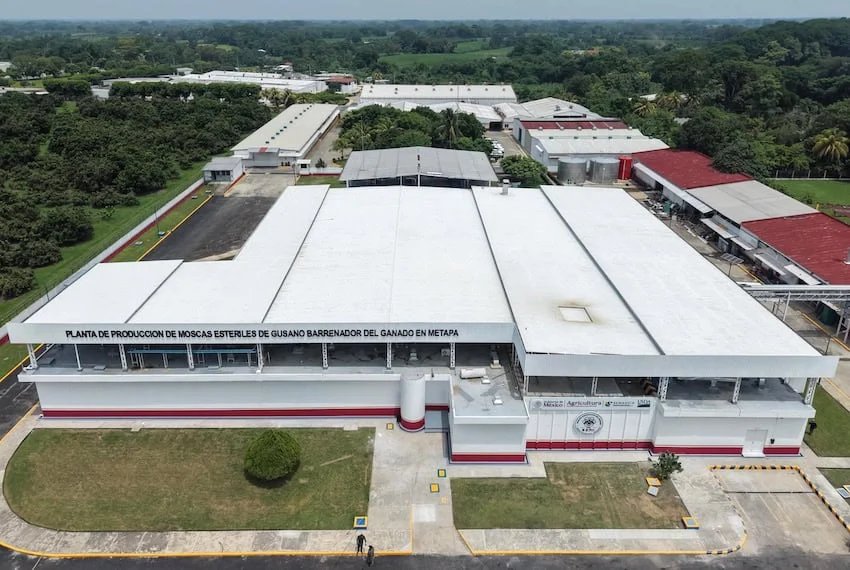
A new sterile fly production plant, built with a $50 million investment from the Governments of Mexico and the United States, has opened in Metapa de Domínguez, Chiapas. This facility aims to combat the New World screwworm outbreak, which is currently threatening livestock health and disrupting cattle trade on both sides of the border.
Agriculture Minister Columba Jazmín López Gutiérrez emphasized that this initiative is a significant step toward safeguarding warm-blooded animals. The plant is projected to produce up to 100 million sterile flies weekly, which are essential in controlling this harmful parasite that burrows into the flesh of animals, potentially leading to severe health issues or death without treatment.
The screwworm was first identified in Mexico back in November 2024 and has unfortunately spread northward into the U.S., with cases confirmed in the Mexican border state of Durango as recently as June. Over 30,000 animals have been infected in Mexico amidst extensive efforts, which have included inspections of more than 5.3 million head of cattle.
In addition to the Chiapas plant, plans are underway for a similar facility in Texas, showcasing a united front between the two nations. U.S. Secretary of Agriculture Brooke Rollins expressed optimism at the plant’s opening, recalling the successful eradication of the screwworm decades ago and asserting that collaboration will once again triumph.
President Claudia Sheinbaum highlighted the importance of cooperation in tackling animal diseases and food safety, indicating that these challenges span borders and require joint solutions. The ongoing outbreak has already impacted trade, as the U.S. has maintained restrictions on importing live cattle from Mexico since May 2025, pushing Mexican producers to adapt by exporting beef instead.