

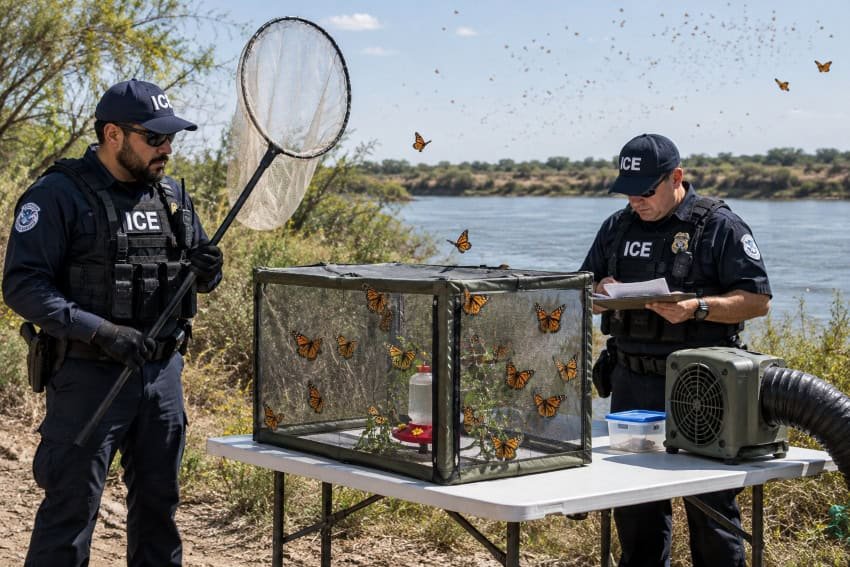
In a surprising development along the Rio Grande, U.S. Immigration and Customs Enforcement (ICE) has begun deploying specialized tactical netting to manage a migration of eastern monarch butterflies, raising significant concerns about the environmental implications for migratory patterns. Thousands of these butterflies, known for their remarkable journey from Canada to Mexico, recently bypassed established ports of entry, leading to increased scrutiny and enforcement actions at the border.
Federal authorities confirmed that, while past migrations may have operated informally, new directives now require that all migratory wildlife present valid documentation before entering U.S. airspace. This shift coincides with growing pressure for regulatory compliance aimed at protecting U.S. agricultural interests.
ICE spokesperson Duane Miller emphasized the importance of adhering to entry protocols but acknowledged the delicate nature of these butterflies. Reports indicate that thermal imaging cameras first detected the butterflies migrating from Oklahoma, prompting a swift response from tactical units equipped to handle the situation. These teams successfully captured a large group and are now determining their fate—potential expedited removal or humanitarian parole to continue their journey to Michoacán.
Wildlife advocacy groups are expressing alarm over the potential risks involved in delaying these fragile creatures, whose survival hinges on a strict nectar-based diet. Although officials of the Government of Mexico are working alongside U.S. counterparts to facilitate these administrative processes, the butterflies are not presently allowed legal counsel to ensure their rights are protected.
As federal agents continue their work, they aim to balance regulatory compliance with the intrinsic need to respect the natural cycles that define the monarch’s migration. The ongoing situation is a poignant reminder of the complexities at the intersection of human policy and the natural world.