

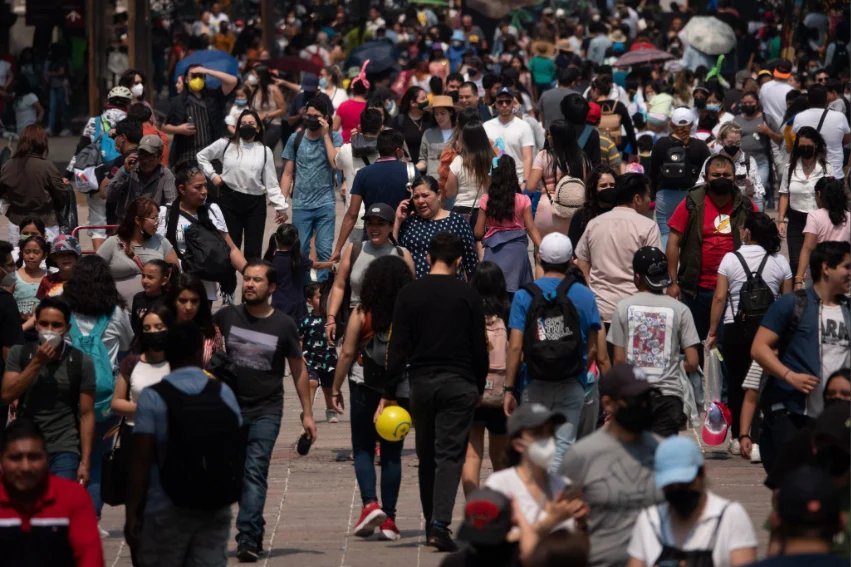
Mexico’s population reached approximately 130.9 million by the end of 2025, reflecting a nearly 4% increase since 2020, as reported by the National Institute of Statistics and Geography (INEGI). This growth rate has slowed compared to previous years, and the demographic landscape is shifting, with implications for daily life across the nation. Understanding these changes is essential as they impact social services, economic strategies, and family planning.
According to INEGI’s recent Intercensal Survey, the country’s demographic composition includes 51.9% females and 48.1% males. Notably, just 0.9% of residents were born abroad, with the majority (57.1%) coming from the United States, highlighting migration patterns that influence local communities.
The average annual population growth from 2020 to 2025 was just 0.7%, down from previous growth rates. The median age has also risen, now standing at 32 years, indicating an aging population. This shift may affect everything from healthcare demands to workforce dynamics, as younger demographics represent a growing need in education and job creation.
Moreover, the fertility rate in Mexico has observed a significant decline, dropping from 1.9 in 2019 to 1.2 in 2024. These numbers indicate that fewer families are choosing to have multiple children, with patterns showing a tendency to delay parenthood. President Claudia Sheinbaum acknowledged these trends, noting they reflect shifts seen globally.
Without a rise in these rates or a substantial increase in immigration, experts warn that Mexico may face challenges in maintaining its population size over the coming decades. Understanding these demographic trends is crucial for the Government of Mexico and other federal institutions as they plan for future economic and social policies that support citizens’ needs, especially as Mexico addresses its responsibilities towards an aging population.