

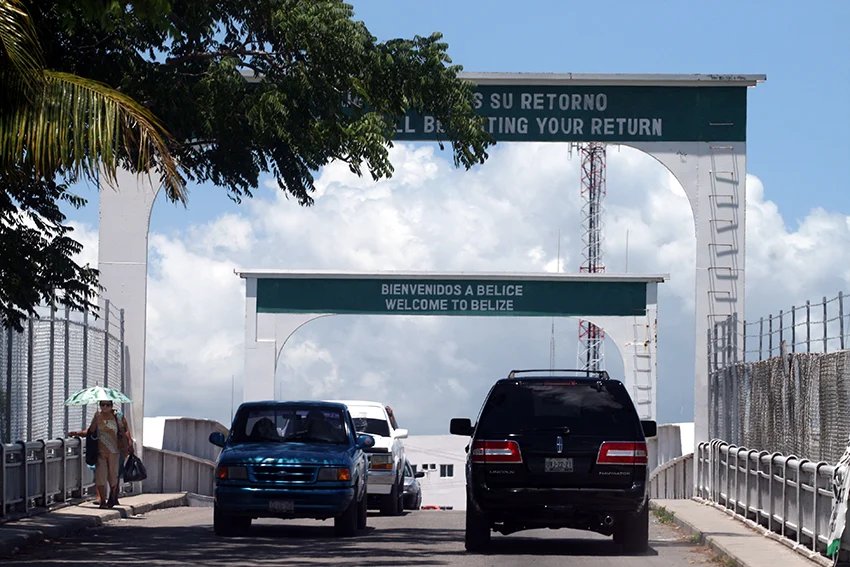
In recent weeks, attention has focused on the complexities surrounding Mexico’s borders, particularly with Guatemala and Belize, which are critical to the lives of many individuals and families in the region. Understanding these borders sheds light on not just geographical facts, but on the human experiences that shape the communities living there. The Mexico-Guatemala border spans approximately 1,149 kilometers, extending from the Pacific coast in Chiapas to the tripoint area that meets Belize, impacting local economies, cross-border relations, and migration patterns.
Chiapas, Campeche, and Tabasco are the three states that share this border with Guatemala, while Quintana Roo is the only state bordering Belize. This makes the southern border a vital link for trade, cultural exchanges, and sometimes, the difficult journey of migrants seeking better opportunities. The Mexico-Belize border is significantly shorter at about 250 kilometers, largely following the Hondo River, illustrating the varied landscapes and communities touched by these borders.
Eighteen municipalities in Chiapas, along with two in Tabasco and two in Campeche, have direct access to Guatemala, while Othón P. Blanco in Quintana Roo is the only municipality facing Belize. This intricate network of municipalities plays a crucial role in fostering relationships and facilitating the movement of people and goods, emphasizing the importance of better infrastructure and services.
A historical agreement between Mexico, Guatemala, and Belize aims to protect a vital area known as the Great Maya Forest Biocultural Corridor, which underscores the importance of environmental conservation and cultural heritage shared across these borders. Additionally, there are eight official crossings between Mexico and Guatemala, significantly impacting lives daily by allowing families to maintain strong ties, while two key crossings serve the Mexico-Belize border.
The proximity of cities like Tapachula, a vital hub for many migrants, further highlights the human stories intertwined with these borders. Tapachula, with a population of 328,000 at the last census, serves as a gateway for those entering Mexico. Chetumal, the capital of Quintana Roo, also plays a significant role, with a population of 233,648, reflecting the dynamic interactions between these cities and their neighboring countries.
In terms of commerce, the value-added tax, or IVA, remains consistent at 8% in southern border areas, aligning with the northern border while differing from the national standard of 16%. This tax structure encourages trade and businesses to thrive in border regions, helping to boost local economies.
As these borders continue to evolve, they remain central to the rich tapestry of human experiences in Mexico, highlighting the ongoing connections, challenges, and opportunities that define life in these vibrant regions.