

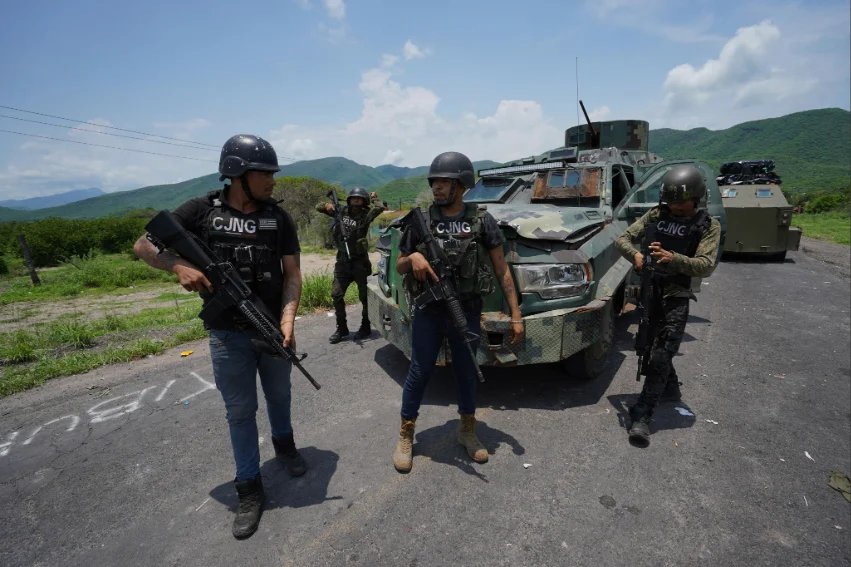
On Thursday, the U.S. Treasury announced significant sanctions against 39 Mexican individuals and 16 companies tied to the Jalisco New Generation Cartel (CJNG), marking a pivotal moment in the fight against organized crime affecting daily life in our communities. These measures aim to dismantle the cartel’s financial networks, which are crucial in trafficking fentanyl and other illicit substances into the United States.
The sanctions specifically target the CJNG’s leadership, including Juan Carlos González, also known as “El Pelón,” who has emerged as the cartel’s new leader following the recent death of Rubén Oseguera Cervantes. In tandem, Mexico’s Financial Intelligence Unit (UIF) has launched its own investigation and reported suspicious financial activities linked to these individuals, including cash transactions and international money transfers.
As a response to the U.S. sanctions, Mexico blocked the accounts of those entities under scrutiny. This is a vital step to strengthen cooperation between the Mexican government and U.S. authorities, aiming to combat money laundering and disrupt the economic foundation of organized crime.
The UIF has identified irregularities in the tax records of those sanctioned, raising concerns about potential shell companies that contribute to illicit operations. Additionally, a complaint has been filed with the Federal Attorney General’s Office (FGR), and the individuals involved have been added to the UIF’s Blocked Persons List. This list serves as a tool to prevent any financial dealings with these entities, reinforcing the efforts to ensure that the financial system is not exploited by criminal organizations.
With the U.S. offering a $5 million reward for Gonzáles’s capture, the stakes are high. These combined efforts from both nations reflect a serious commitment to enhancing safety and stability, which directly impacts how citizens live and interact within their communities.