

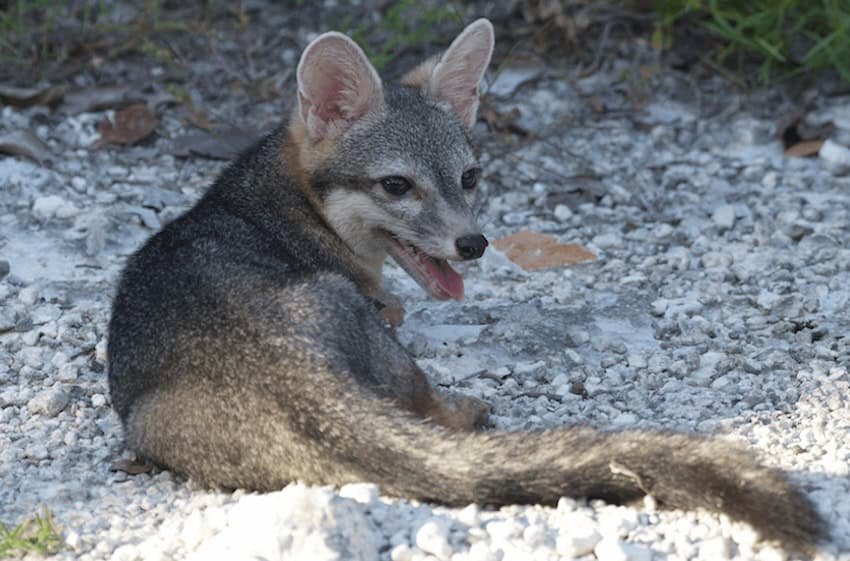
A long-lost species has made a surprising return to Cozumel, bringing hope to conservationists and residents alike. The Cozumel dwarf fox, once feared extinct, was recently spotted for the first time in over twenty years. This discovery not only rekindles interest in a crucial part of Mexico’s biodiversity but also offers a chance for local communities to engage in conservation efforts for the island’s unique wildlife.
In September 2023, an adult male fox was found wandering disoriented near Cozumel’s coastal highway. Local residents alerted the authorities, leading staff from the Fundación de Parques y Museos de Cozumel to safely rescue the animal, ensuring it underwent a thorough health check before being released into the Laguna Colombia State Reserve, a protected area well-suited for its habitat.
This special fox, a member of the Urocyon genus, is much smaller than its mainland relatives, measuring 60% to 80% of their size. It holds a unique position in the region’s ecosystem, having flourished in isolation for thousands of years. However, this isolation also means that the species has never been formally categorized or recognized as a distinct one, leaving many questions about its population and habitat unanswered.
The rediscovery was documented in a recent study published in Neotropical Biology and Conservation, highlighting the ongoing need for targeted research and habitat protection. Despite this significant find, experts caution that it does not yet signify a successful conservation story, emphasizing that much work remains to understand the fox’s current situation and the challenges it faces.
Researchers, including lead author Travis Bayer, stress the urgency of undertaking comprehensive field surveys and genetic studies. There is a growing concern about threats like development and invasive species that continue to impact Cozumel’s fragile ecosystems. The community’s role is pivotal, as increased awareness and conservation efforts can foster a deeper connection to the island’s irreplaceable wildlife.