

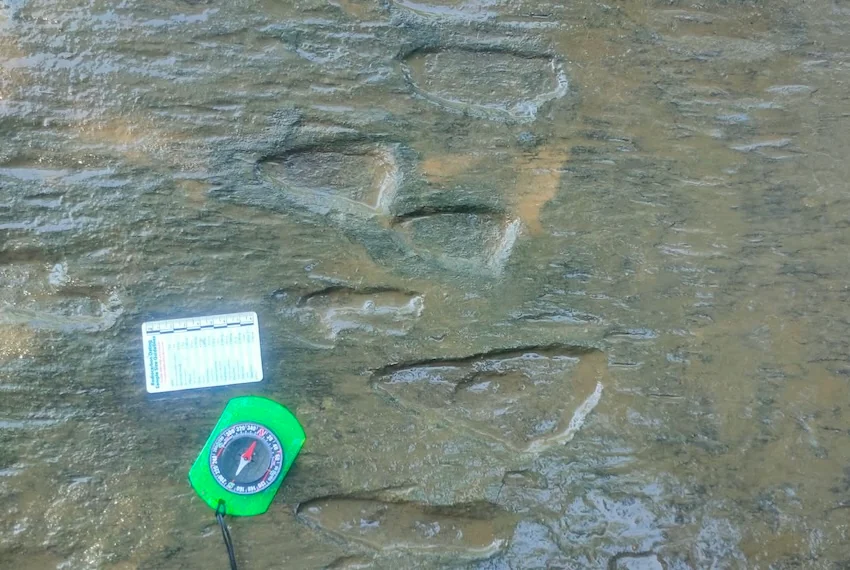
Residents of San Juan de los Plátanos in Michoacán recently stumbled upon a treasure—at least 50 dinosaur footprints etched into a streambed. This remarkable find, announced by Mexico’s National Institute of Anthropology and History (INAH), offers a direct link to a time when these magnificent creatures roamed the earth, potentially enriching both our understanding of natural history and local pride.
The tracks, discovered in an area covering about 40 square meters, may have been left by a variety of dinosaurs, including large carnivores, smaller raptors, and plant-eating duck-bills. The footprints, measuring between 12 to 48 centimeters in length and up to 30 centimeters wide, provide tantalizing hints about the creatures that once traversed this part of Michoacán.
Paleontologist Raymundo Cervantes Barriga from INAH inspected the site and emphasized the need for further analysis to accurately identify the species. While he has linked these prints to families known to exist in Mexico during the Late Cretaceous period, a conclusive identification will require deeper study. This era, which lasted from around 100 to 66 million years ago, was marked by rich ecosystems that supported diverse dinosaur life.
Specialists have begun detailed documentation of the site, collecting rock samples and creating molds of the footprints for further examination. This research has the potential to illuminate how dinosaurs moved within their environment and interacted with one another. This discovery brings Michoacán’s total documented dinosaur footprint sites to four, contributing to a broader count of just over 30 such sites across the nation.
Despite the region’s challenges with organized crime, San Juan de los Plátanos remains vibrant with its lime orchards and unique culinary traditions, including the celebrated dish morisqueta. Located approximately 145 kilometers southwest of Morelia, this small community of about 1,300 people is not just a place of historical significance, but also a testament to resilience and cultural richness. The discovery of these footprints serves not only as an academic achievement but also as a source of inspiration and hope for the local community.