

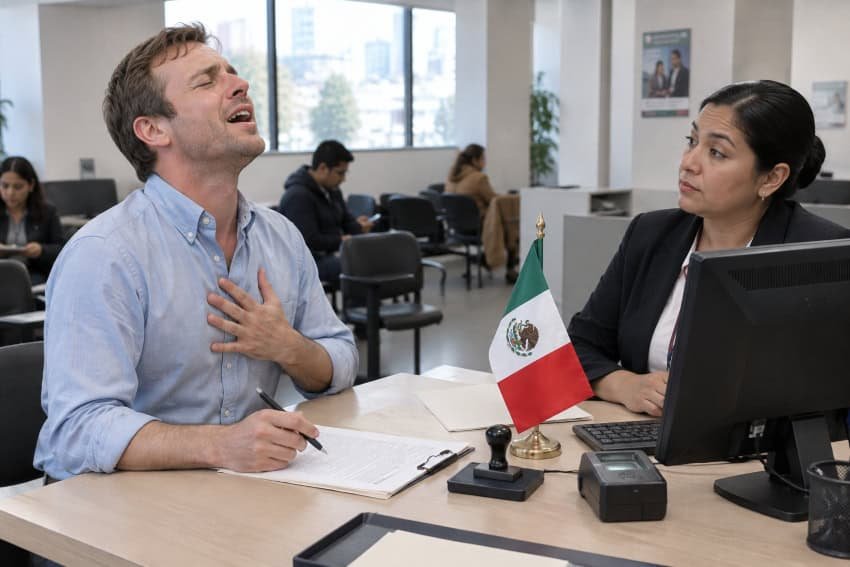
In a light-hearted yet poignant moment, a 34-year-old applicant, Mark Miller, found himself unexpectedly transformed during his final steps to becoming a citizen of Mexico. As he completed paperwork at the Secretariat of Foreign Affairs, he suddenly delivered a flawless rendition of José Alfredo Jiménez’s beloved ranchera, “El Rey.” This transformation highlights the unique emotional connection many feel to Mexican culture, even in bureaucratic settings.
Witnesses at the office observed Miller’s posture change, as if he tapped into a deeper cultural well. He closed his eyes, leaned back, and began to navigate the nuances between Jiménez’s original version and Vicente Fernández’s celebrated cover. “I knew exactly when to hold out the syllable in ‘re-e-ey,’” he shared, reflecting on how this experience went beyond mere music. It became a profound moment of cultural belonging.
Officials from the Secretariat acknowledged this phenomenon, which they refer to as the “subliminal cantina effect.” It’s a whimsical yet significant aspect of the naturalization process, where applicants seem to absorb the nation’s musical heritage in a singular, impactful moment. This contrasts with how native citizens often grow up learning these songs among family and friends.
SRE spokesperson Ana Luisa Peralta explained that, upon passing the necessary checks, applicants not only come to embody the lyrics of “Por Tu Maldito Amor” but also develop the emotional depth required to sing “Querida” with heartfelt passion. She noted that this is a common, if amusing, outcome of the naturalization procedure.
For Miller, his journey is almost at its conclusion, with only one final hurdle remaining. He must demonstrate his ability to trill his r’s distinctly—an endearing requirement that underscores the cultural integration that comes with Mexican citizenship. As he prepares for this test, he embodies the rich tapestry of Mexico’s musical legacy, resonating within all who call this vibrant nation home.