

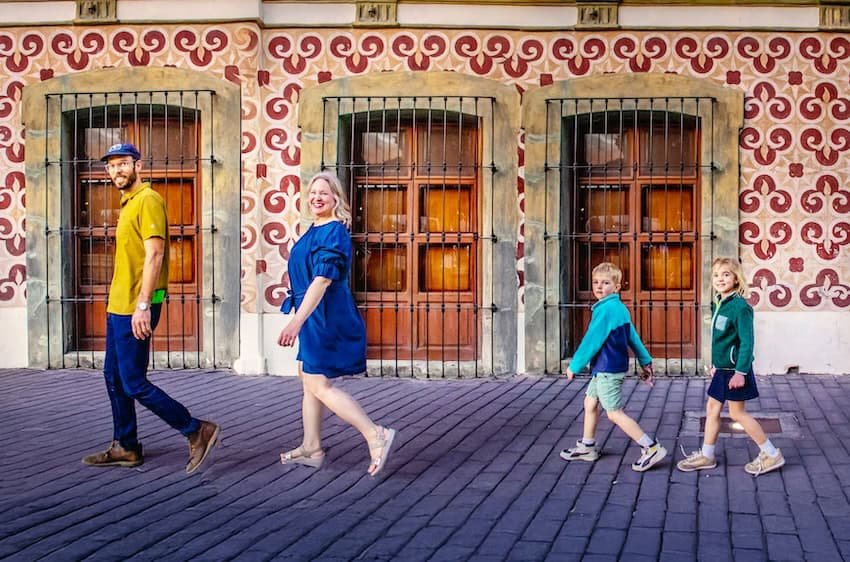
Families moving to Mexico often grapple with how the transition will affect their children. A growing number of expatriates are exploring life in cities like San Miguel de Allende, where roughly 10% of the population comes from abroad. Yet, the experiences of children who live between cultures are often overlooked. Understanding these children’s journeys is vital for families contemplating a move, as immigrant children face unique challenges and opportunities that shape their identities.
Isabella Mena, who spent the early part of her life in Los Angeles, moved to Querétaro during the pandemic. Her family’s decision stemmed from rising living costs in the U.S. Although her first year in her new home was isolating, meeting other expat kids opened new doors. She transitioned to life in San Miguel de Allende, where she appreciates the slower pace and vibrant community that helped her grow socially. However, Isabella recalls a painful encounter in Querétaro, where her father’s accent drew prejudice. This incident underlined her complex identity as she grapples with multiple cultural ties, knowing her roots are in the U.S., Venezuela, and Ecuador.
Tristan Jackson offers another perspective, having moved to San Miguel at a young age. His upbringing there shaped his understanding of home and belonging. Initially identifying as American, he later realized Mexico was where he felt most at home. As he navigated high school in the U.S., he found that his Mexican background offered him a unique perspective, especially during cultural celebrations. Despite initial worries about academic opportunities, Tristan excelled, securing admission to Princeton University, showcasing that a Mexican education can be equally competitive.
Lazar Golden, the twin brother of the original author, also reflects on his upbringing in San Miguel. He feels deeply connected to both Mexican and American cultures, attributing his identity to the community that embraced him. His experiences in sports highlighted differences in competition and access, revealing cherished connections in Mexico that transcended athleticism. Despite recognizing that the U.S. may offer better facilities, Lazar believes motivation and community can provide ample opportunities in Mexico.
Together, these stories illustrate that moving to Mexico can offer children rich experiences, but it requires navigating the complexities of identity, belonging, and opportunities. For families considering this path, understanding these narratives is crucial in making informed choices about their children’s futures and embracing the beauty of a life woven through multiple cultures.