

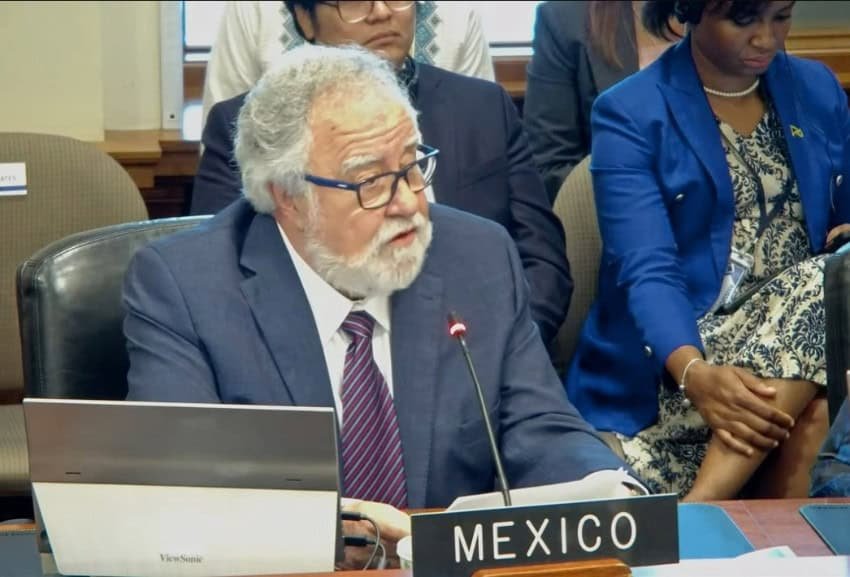
On a recent international stage, Mexico chose to abstain from a crucial vote concerning Nicaragua’s escalating political tensions, a decision that could directly influence how this situation affects our neighboring countries. This vote pertained to a proposal for an emergency meeting of the Organization of American States (OAS) to address Nicaragua’s decision to bar opposition politicians from participating in elections, a move seen as a significant threat to democracy in the region.
Despite concerns from numerous nations, including the United States, Mexico’s representative to the OAS, Alejandro Encinas, articulated the government’s stance. He emphasized that labeling Nicaragua’s internal issues as threats could lead to measures that infringe upon sovereignty and disrupt peaceful resolutions. Encinas highlighted Mexico’s commitment to non-intervention and self-determination, principles enshrined in our Constitution.
The OAS resolution, which passed overwhelmingly with 29 votes in favor and only one against, identifies Nicaragua’s political situation as a pressing issue for the Americas. This meeting aims to address the implications of Nicaraguan President Daniel Ortega’s decision to eliminate elections and amend the constitution to restrict opposition.
In a Thursday press conference, President Claudia Sheinbaum echoed Encinas’s sentiments, reaffirming Mexico’s belief that engaging in external interventions is not the solution. Meanwhile, countries like Brazil, which opposed the resolution, and others abstaining, such as Haiti and Venezuela, illustrate the complexity of alliances and the differing views on intervention in national governance.
The urgency of convening the OAS, as articulated by the U.S., aims to take action before Ortega’s government officially codifies its controversial changes on September 1. While the OAS does not hold the power to enforce sanctions, its diplomatic influence is crucial in guiding member states toward maintaining democratic principles.
As citizens, it is essential to understand how these international decisions resonate within our borders. Mexico’s non-interventionist policy aims not only to uphold sovereignty but also to foster an environment where diplomatic dialogue can flourish, even amid turmoil. This situation calls for awareness of our role in regional politics and how decisions made today may shape the future of democracy in our hemisphere.