

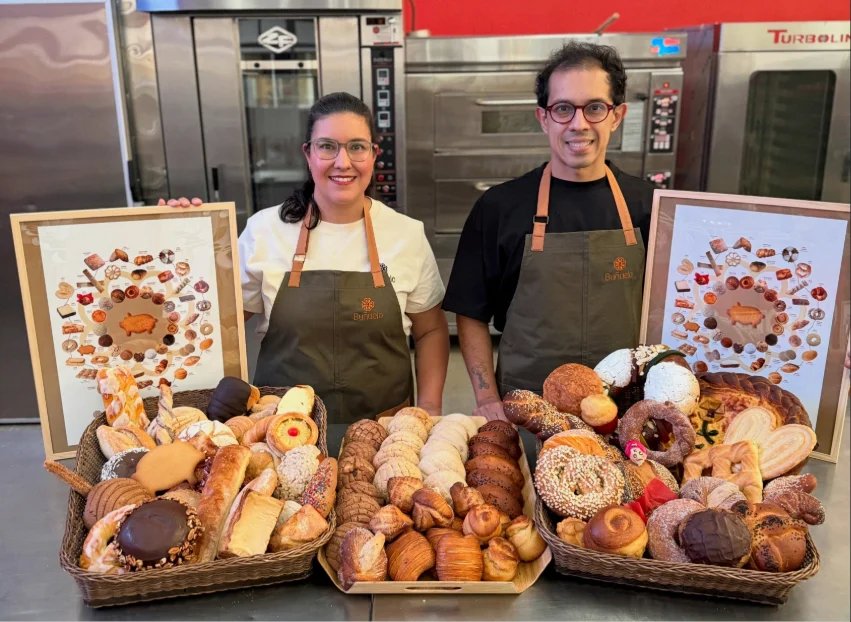
A groundbreaking initiative by Mexican bakers Ariana and Julio González is breathing new life into the country’s rich culinary heritage. Their work, the Primer Mapa del Pan Mexicano, aims to celebrate and document the vast diversity of Mexican breads—a staple in many households—ranging from beloved conchas to the festive pan de muerto. This map, emerging from the bakery Buñuelo in Naucalpan, serves as an invaluable resource for citizens and food enthusiasts, illuminating an often-overlooked aspect of Mexico’s gastronomic culture and enhancing our understanding of daily culinary practices.
Through meticulous research, the González siblings categorized these traditional breads into 15 families based on their baking lineage, rather than geographical location. This approach reveals profound connections among various breads, showcasing how distinct textures and flavors can arise from shared techniques and customs. For instance, the savory delights of bolillos and telera commonly fill tortas, while sweet treats like nubes and conchas offer a comforting experience across generations.
The map highlights more than just the technicalities of bread-making; it tells stories steeped in tradition and family ties. Each type of bread represents a unique flavor of communal life, contributing to shared celebrations, from Día de Muertos to Three Kings Day. The siblings, honored as Bakers of the Year by the Mexico Gastronomic Guide, aim to foster appreciation for the craft that goes into each loaf, emphasizing that there is a rich cultural narrative behind every bite.
With a staggering estimate of over 1,000 varieties of Mexican bread, the map presents 52 significant selections, offering a glimpse into the country’s evolving baking landscape. The González’s intent is not to create a definitive catalog, but rather to invite everyone to explore and cherish this heritage. As Julio González aptly stated, “There are techniques, traditions, and baking families that are all part of the same heritage.”
This initiative comes at a crucial time when Mexican bread culture is gaining renewed attention. In light of recent controversies and commendations—like Panadería Rosetta being recognized among the world’s ten best pastry makers—this map becomes a timely reminder of the value embedded in Mexican culinary traditions. As our connection to food deepens, understanding its roots becomes increasingly essential for fostering community ties.
For those curious to explore this new resource, the single-sheet map is available for 135 pesos at Buñuelo in Naucalpan, and a digital version is planned for the future. In celebrating these breads, the González siblings encourage all of us to appreciate the warmth and connection found in the simple act of sharing a meal.