

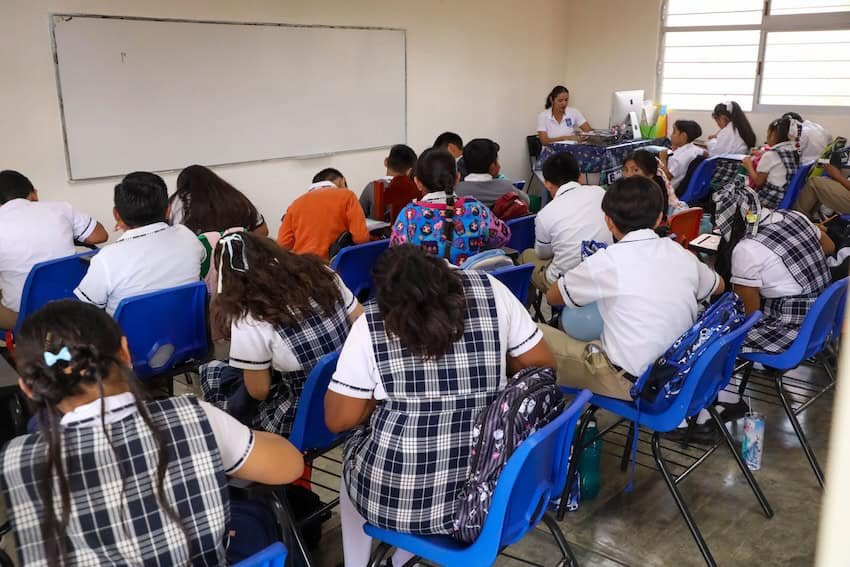
Recent findings from the OECD’s Programme for International Student Assessment (PISA) paint a concerning picture of education in Mexico. Four out of ten 15-year-old students scored below the basic level in science, mathematics, and reading, revealing significant challenges that affect not just academic performance, but the future opportunities of our youth across the country.
This evaluation tested 7,843 students from 297 schools, and the results indicate that 41.8% scored below the basic threshold—more than double the OECD average of 19.7%. In mathematics, Mexican students averaged 388 points; in reading, they scored 408; and in science, 414. All these figures fall far short of the OECD averages, which stand at 463, 461, and 482 respectively. Alarmingly, the performance has declined further since the 2022 assessment, with a drop of seven points in both math and reading.
These results mark the lowest for Mexico since 2009, a sobering setback for extensive educational reforms. However, it’s important to recognize that Mexico is not alone in facing these challenges. Education systems worldwide are grappling with declining student performance, as highlighted by OECD officials. Andreas Schleicher emphasized a global drop in reading skills during a recent interview, echoing concerns shared by many nations.
Despite these challenges, there is a glimmer of hope in the attitudes of Mexican students. Over 80% expressed curiosity about various topics, surpassing the global average, and only 11% believed that school was a waste of time—well below the OECD average of 24%. This indicates a potential readiness for change and improvement in the educational system.
Some experts suggest that Mexico’s situation may also reflect the complexities of its educational landscape. The expansion of secondary education has allowed previously marginalized populations to enroll, which could contribute to the mixed results. Yet, this success also brings challenges, as evidenced by a report indicating that contemporary factors, including shorter attention spans, increased use of artificial intelligence, and a global shortage of teachers, are impacting educational performance.
As the Government of Mexico and its secretariats begin to delve into these results, ongoing discussions about improving education will be essential. Focused efforts on teaching quality and student engagement could pave the way for a brighter future for the nation’s students. In the face of these challenges, it’s crucial to remain hopeful and committed to creating a stronger educational framework for all.