

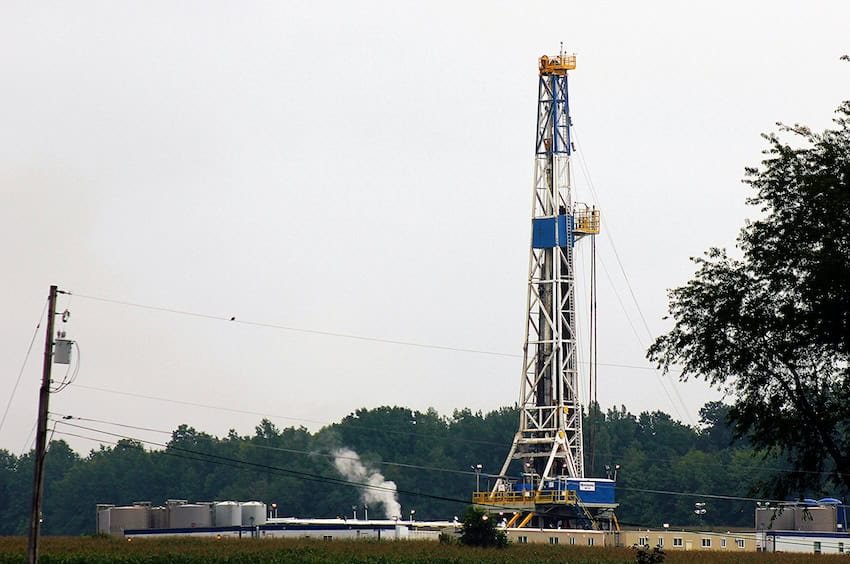
Recent developments in Coahuila have sparked significant interest, as the feasibility of hydraulic fracturing, or fracking, is being studied by the Government of Mexico. This process aims to enhance gas extraction from beneath the northern border state, prompting concerns and hopes among local communities regarding its potential impact on daily life.
Petróleos Mexicanos (Pemex), the state-owned oil company, has initiated drilling in the Hidalgo community to evaluate water resources. Pemex Director General Juan Carlos Carpio Fragoso emphasized that this assessment is crucial to ensure that the water being studied is saline and does not affect sources meant for human consumption. “If there’s not enough safe drinking water, the project will not move forward,” he assured during a congressional session.
The government has set water availability as a key condition for allowing fracking to proceed in Mexico. In light of water scarcity issues, the findings from these assessments will play a pivotal role in determining whether fracking can be implemented without jeopardizing local water supplies.
Fracking involves drilling deep into the earth and injecting water, sand, and chemicals at high pressure to fracture rock formations, facilitating gas release. The administration led by President Sheinbaum is considering this method as a strategy to lessen dependence on gas imports, particularly in the context of rising global prices and uncertainty surrounding the United States-Mexico-Canada Agreement.
Currently, Mexico relies heavily on the United States for its gas, importing up to 75% of its supply. Government assessments indicate that the Burgos and Sabinas-Burro-Picacho basins in Coahuila, Nuevo León, and Tamaulipas hold abundant resources that could support fracking, with potential yields of about 120.8 million cubic feet.
Nevertheless, experts caution that merely reducing gas imports will necessitate developing 24 new exploration and production projects, requiring significant investment of around $108 billion to generate an additional 9 billion cubic feet per day.
Environment Minister Alicia Bárcena has noted existing restrictions that inhibit fracking, including the pressing issue of water availability. If the study in Hidalgo confirms adequate saline water resources, it could pave the way for pilot fracking tests to begin, drawing widespread attention and scrutiny from residents and stakeholders across the nation.