

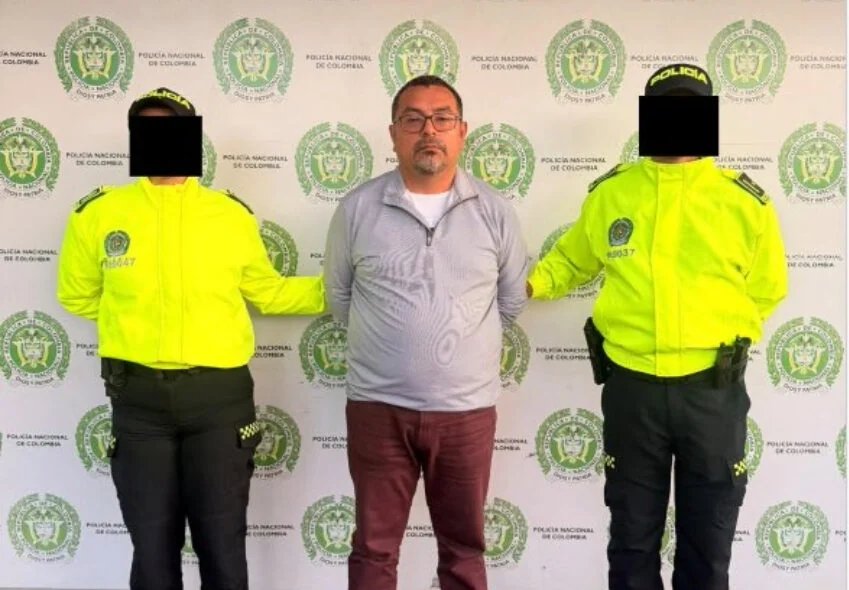
Luis Benítez Alcántara, a federal judge from Mexico, has been arrested in Colombia on serious charges linked to a $2 million bribe from drug traffickers. This situation has significant implications for our society, as the U.S. government is pursuing justice for those who enable such criminal activities. Benítez, 49, is accused of accepting bribes to facilitate the release of individuals involved in a billion-dollar drug trafficking operation, highlighting how deeply corruption can infiltrate our legal systems.
This case marks the first time a Mexican federal judge faces indictment in the United States, where he may soon be extradited to confront nine charges, including being an accomplice to drug trafficking and related homicides. U.S. Attorney General Todd Blanche emphasized that corrupt officials will be held accountable, no matter their location, stressing the commitment to dismantling networks that threaten public safety.
The bribery at the center of this case involved Andrew Clark, a Canadian drug trafficker, who was facing severe charges in both murder and drug trafficking. Although Clark was initially released due to Benítez’s actions, he was rearrested shortly after and is now in the U.S. facing numerous indictments, underscoring the complex web of international drug trade and corruption.
Benítez had been presiding over Clark’s extradition case when he took the bribe, leading to rulings that facilitated Clark’s release in early 2025. This not only raises concerns about the integrity of our judiciary but also serves as a reminder of the far-reaching effects of corruption that diminish public trust in the legal system.
With a career spanning over two decades, Benítez’s judicial record is now marred by these allegations. His actions are being scrutinized in a broader investigation into a violent multinational drug trafficking network, previously led by Ryan James Wedding, a former Olympic snowboarder apprehended earlier this year.
In a related incident, Édgar Aarón Vázquez, a cartel leader accused of protecting Wedding, was killed during a confrontation with law enforcement in the State of Mexico. This escalation illustrates the ongoing struggle against organized crime and the grave risks involved for those combating it.
As this investigation unfolds, it serves as a stark reminder of the challenges we face in ensuring justice and integrity within our institutions. The potential consequences for Benítez could be severe, with up to 15 years in prison possible for each charge, emphasizing the importance of accountability for public officials in our fight against corruption.