

A recent survey by the National Institute of Statistics and Geography (INEGI) reveals a curious trend in Mexico’s demographic landscape: the areas experiencing the most significant population growth are not those with the highest fertility rates. In 2025, Mexico’s population reached a historic 130.9 million, but the growth rate has slowed to just 0.7% annually, its lowest in decades. This growth is primarily concentrated in certain northern and southeastern states, affecting community dynamics and local economies.
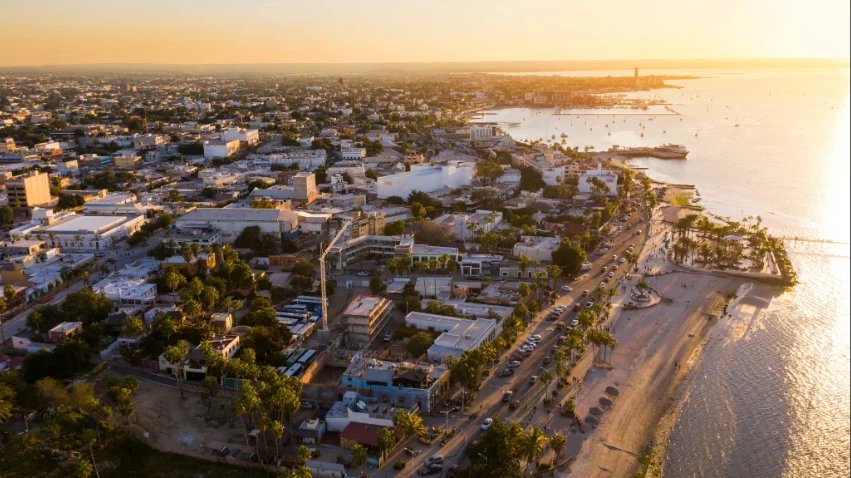
Baja California Sur has emerged as the front-runner in population growth, with an impressive average annual rate of 3.4%. Quintana Roo follows closely at 2.2%, while Querétaro, Nuevo León, and Coahuila also register notable increases. The surge in Quintana Roo can largely be attributed to an influx of migrants and the expansion of urban and tourist areas. A similar situation is evident in Baja California Sur, while states like Baja California and Querétaro are drawing new residents due to urbanization and job opportunities. Conversely, Guerrero and Veracruz are seeing a population decline, shrinking by 0.6% and 0.3%, respectively.
Interestingly, the states with the fastest growth are not the same as those with the highest fertility rates. Chiapas leads in fertility at 1.8 children per woman, followed by Guerrero and Durango. In stark contrast, both Baja California Sur and Quintana Roo, despite their considerable population growth, report some of the nation’s lowest fertility rates, at 1.2 and 1.1 children per woman, respectively. Mexico City, with a population of 9.1 million, also stands out for having the lowest fertility rate of 0.8, though it remains the second most populated entity, just behind the state of Mexico, which boasts 17.5 million residents.
As these trends unfold, they reflect broader changes in migration patterns and living conditions that will continue to shape the social and economic fabric of Mexico.