

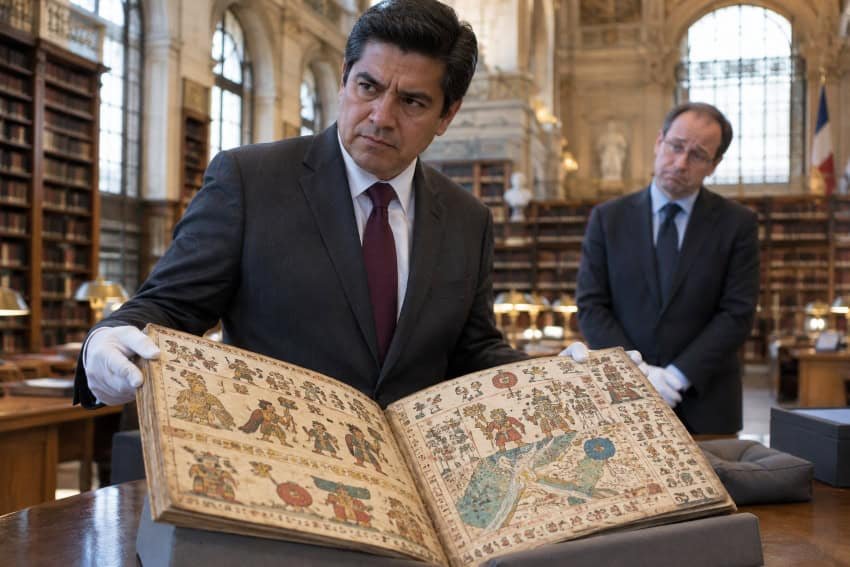
Officials from Mexico’s National Institute of Anthropology and History (INAH) have raised concerns over a historical issue that touches on cultural heritage and international collaboration. The National Library of France has been in possession of the Azcatitlan Codex for 166 years, a crucial piece of Mexica history, yet has not returned it despite multiple requests. This situation affects not just scholars and historians but also the general public, as it highlights the need for respectful handling of cultural artifacts.
Emiliano Muñoz, a representative of INAH, expressed frustration over the continual assurances from the French library, which have not resulted in any tangible action toward returning the codex. Allegations of poor faith have surfaced as the wait stretches into over a century. Muñoz emphasized the importance of trust and integrity in such exchanges, likening the situation to borrowing a book from a friend, which should naturally conclude with its return.
Responses from France have added a layer of contention to the situation. The French library’s director humorously commented on Mexico’s borrowing history, referencing past exchanges, and suggested that the Azcatitlan Codex might have been perceived as a gift. Challenges like this remind us of the need for responsible stewardship of shared cultural history.
INAH’s leadership is determined to explore potential collaborations with other institutions that prioritize mutual respect and accountability. As negotiations continue, this case emphasizes the ongoing dialogue surrounding cultural repatriation in our globalized world, helping to shape how future generations experience and understand their heritage.