

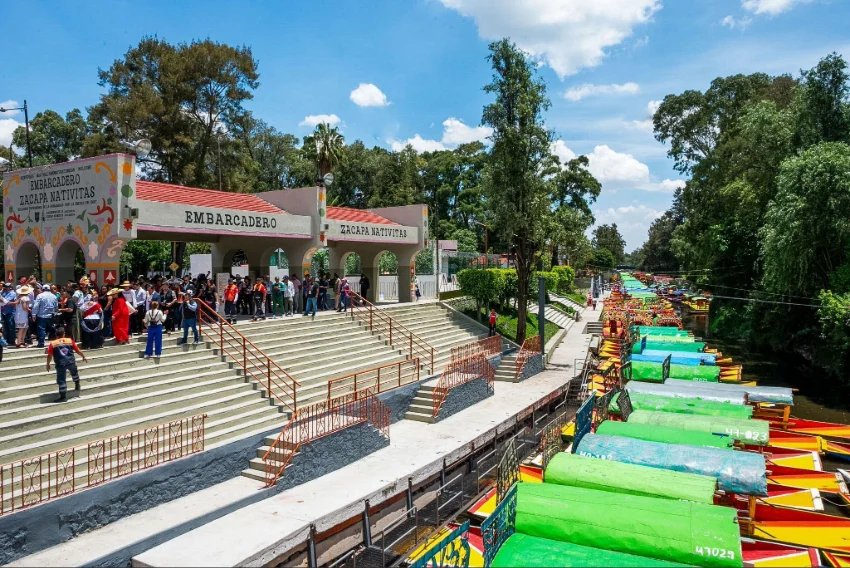
The historic canals of Xochimilco, a cherished gem in Mexico City, are undergoing significant renovations that promise to enhance the experience for both locals and tourists alike. The project, part of the city’s beautification efforts for the upcoming 2026 FIFA World Cup, addresses long-standing concerns about the state of these canals and aims to revitalize this vibrant area for more than 500,000 annual visitors and the 2,000 families who depend on it.
A substantial investment of approximately 174 million pesos (around $9.9 million) has been allocated to revamp critical facilities. Key areas like Cuemanco, Nativitas, Las Flores, and Zacapa have seen updates to commercial spaces, improved service areas, and upgraded infrastructure including modern restrooms, new drainage systems, and enhanced safety features. The project also emphasizes better pedestrian access and clearer navigation for trajineras, ensuring a smoother experience for everyone.
During the inauguration, Mexico City Mayor Claudia Brugada highlighted the extensive scope of the renovations, covering over 50,000 square meters and improving access for visitors. These enhancements are not only about aesthetics; they play a crucial role in the broader regeneration of Xochimilco’s unique ecosystem. The wetlands here are vital for the city’s climate regulation, capturing pollutants, and supporting diverse plant and animal life, including the iconic axolotl.
Despite its beauty, Xochimilco faces significant environmental challenges. Decades of urban expansion, unchecked development, and pollution have put a strain on this delicate ecosystem. In response, local authorities have launched initiatives to restore the area’s natural balance, including planting 55,000 new plants, many of which attract essential pollinators. This is a vital step in ensuring the survival of both the region’s biodiversity and its critical environmental services.
Brugada expressed optimism about the impact of these investments, stating that they reflect a commitment to preserving the rich ecological heritage of Xochimilco. Moving forward, these efforts not only aim to enhance the local economy but also to protect a vital green space in the heart of Mexico City, ensuring it remains a treasured destination for generations to come.