

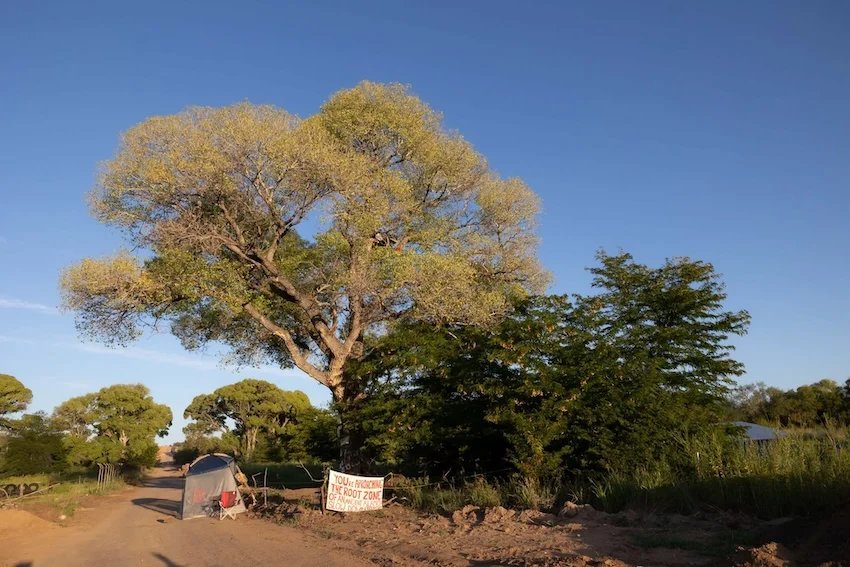
A centuries-old cottonwood tree on the U.S.-Mexico border, affectionately called the “grandmother” tree by activists, was cut down Monday amid ongoing tensions over border wall construction. This incident directly impacts both local ecosystems and the communities surrounding the site, highlighting the ongoing struggle between environmental conservation and federal infrastructure projects.
Located in Lochiel, Arizona, the tree was the last of four ancient cottonwoods slated for removal to facilitate the expansion of the border wall. Conservation groups estimate its age at 200 to 250 years, symbolizing a natural heritage that many residents hold dear. The removal followed a lengthy protest lasting approximately 70 days, during which activists sought to preserve the tree from demolition.
In a swift operation, U.S. Border Patrol agents removed protesters from the tree, resulting in multiple arrests. Witnesses reported that agents employed forceful measures, leading to allegations of excessive use of physical force. The U.S. Customs and Border Protection (CBP) agency stated that the cottonwoods had been identified for removal as part of the border wall project, claiming that environmental assessments showed no active migratory bird nests in the area.
The Tohono O’odham Nation, an Indigenous tribe whose ancestral lands extend into Sonora, has denounced the tree’s destruction, expressing concerns over the federal government’s approach to cultural and natural resources in favor of this controversial wall. Their territory is crucial for migration, and the loss of this tree is seen as part of a broader challenge to environmental stability in the region.
As construction progresses, activists remain determined, vowing to continue their resistance. The project entails building a dual steel barrier through a vital wildlife corridor in the San Rafael Valley, affecting the delicate balance of local ecosystems and migrant routes.
The community’s response underscores a deep-rooted connection to the land and its history, as many consider the fallen tree a symbol of resilience. The Tohono O’odham Nation has plans to organize a rally to further amplify their message against the wall and its implications. The ongoing dialogue surrounding this issue reflects a growing awareness of the intersection between human rights and environmental conservation, emphasizing the need for a balanced approach to border security and ecological preservation.