

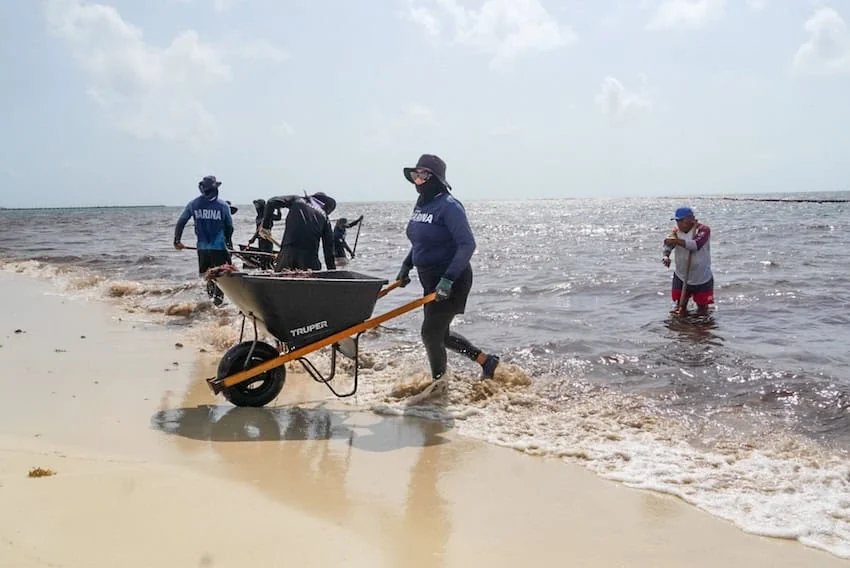
Sargassum season in the Mexican Caribbean has officially come to a close, bringing a collective sigh of relief to local communities reliant on tourism. This year, the sargassum presence extended longer than in previous years, with autumn’s cold fronts finally reducing sea temperatures and consequently the influx of seaweed. Reports from the Quintana Roo state Ministry of Ecology and Environment indicate a record collection of 156,631 tonnes of sargassum this year—nearly double the amount gathered in 2025.
The Mexican Navy played a crucial role, removing 72,000 metric tonnes, representing a significant increase in their sargassum management efforts. Using drones and satellite technology, they were able to track the sargassum movements better, although only about 16.4% was collected from the open ocean. The collective effort to manage this issue involved an investment of around 4.3 billion pesos, funded through contributions from hotel operators and various government levels.
Environmental scientists have observed that sargassum levels in Northwest Africa—where the seaweed originates—have increased significantly, which could indicate similar trends for the coming years. Experts suggest that the expected “Super El Niño” climate phenomenon could shape future sargassum seasons, potentially leading to greater challenges ahead.
In response, the Quintana Roo government is planning to install a large ocean barrier, known as GO 60 by 60, designed to mitigate sargassum flow into prime tourist areas. This structure, intended to divert the seaweed while allowing safe passage for ships, will be positioned 60 kilometers offshore at a 60-degree angle. Despite the promise of this plan, its implementation will require careful consideration of ecological impacts, as well as addressing the technical challenges posed by the region’s ocean currents.