

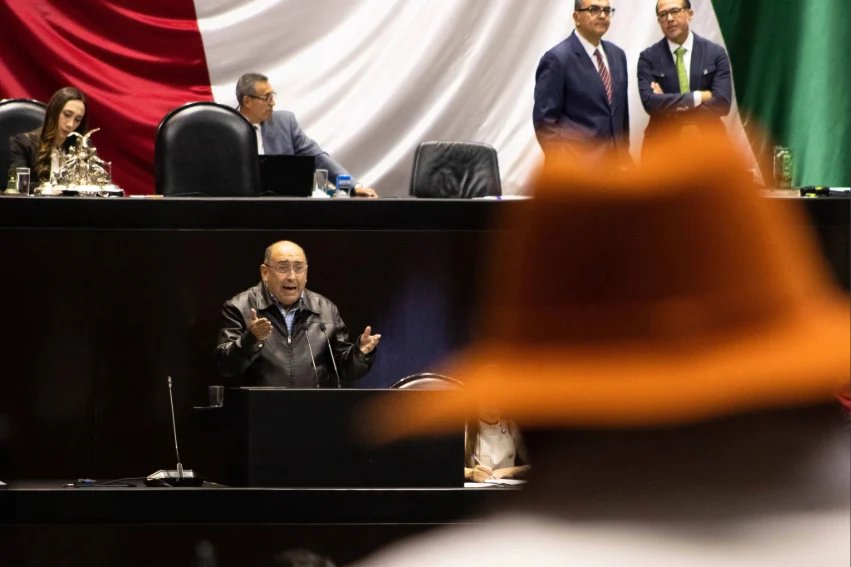
The recent passage of a controversial bill by Mexico’s Chamber of Deputies could have significant implications for free expression. After nearly ten hours of debate, lawmakers approved legislation aimed at addressing digital deception, raising concerns among many that it may inadvertently stifle political dissent and criticism in the digital age. With a vote tally of 281 in favor and 83 against, this measure follows its prior approval in the Senate, where it faced considerable backlash from opposition parties and civil rights advocates.
Critics, including various speakers during the debate, labeled it an “anti-meme bill,” suggesting that its broad language could sanction expressive forms like parody and online memes that utilize official symbols. This legislation, now awaiting presidential approval, allows for penalizing unauthorized commercial use of logos and emblems linked to public institutions, introducing fines in the millions and potential prison sentences of one to five years.
A key point of contention lies in Article 403 bis, which targets anyone using official identities to mislead for illegal purposes. Many worry that vague definitions regarding “deception” could enable censorship of legitimate critique and creative expression. Digital platforms might feel pressured to remove content preemptively, fearing hefty fines for non-compliance.
Supporters of the bill argue that it is aimed at combating piracy and fraud rather than restricting freedom of speech. Deputy Elena Edith Segura emphasized that the phrase “on a commercial scale” clarifies the government’s intent to tackle profit-driven misuse rather than individual expression. However, opponents question how this would be defined and voiced concerns over the ambiguity surrounding terms like “institutional graphic identity” and the metrics for determining intent behind actions.
As Mexico navigates these complex legal changes, the potential for impacting digital dialogue and the cultural landscape remains a critical conversation among citizens and lawmakers alike. The balance between protecting public institutions and upholding the right to free speech will be pivotal in the coming days.